Ōtari Raranga Raumati 2026 - Waenganui (Intermediate)
Ma te mōhio ka roa, ma te ora ka mōhio
Through learning there is life, through life there is learning
Nau mai haere mai, welcome to Ōtari Raranga Wānanga – Waenganui
Our kaiako will have made it clear to you when you can advance to this level from beginners.
If you are new to Ōtari but have experience please reach out before committing.
Projects are planned in advance of each wānanga to help us move forward together as a rōpū and awhi one another while working on similar taonga.
Please check your emails beforehand so you know what to bring.
Waenganui Wānanga are an important step toward joining our Tuakana Rōpū, who will often be attending these wānanga.
While they work on their own taonga projects, they are a valuable source of support for learners—happy to kōrero, share advice, and offer inspiration along the way.
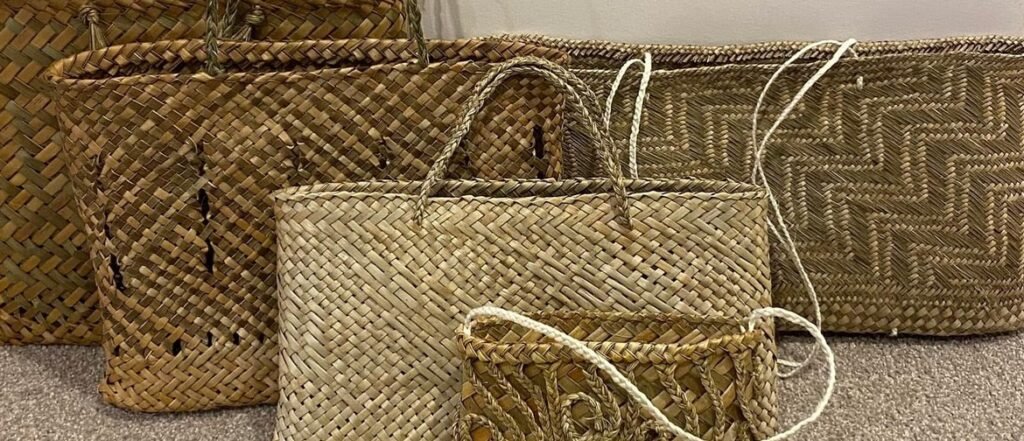
Projects may include new closes for your kete timata, kete waikawa, puritanga, pīkau and pōtae.
We will teach you preparation, preservation and storage of harakeke – important especially over winter months. Additionally, we will induct you to the Ōtari Pā Harakeke when ready.
With regular attendance, you will deepen the mātauranga gained from beginner classes and share your learnings with others. (Refer to below for a reminder)
What’s included in your intermediate ticket?
– Three+ hours weaving class with our tuakana weavers and raranga rangatira.
– Limited access to tools, as you are expected to have your own kete mahi (tool kit).
– You are expected to bring your own harakeke.
– We encourage you to harvest for yourself, but if you are unable to harvest for class, we have ‘Please harvest for me’ options in addition to your ticket at least three days before class.
– Light refreshments are provided, and we encourage you to bring kai to share
Led by our raranga Rangatira, Frank Topia (Ngā Puhi, Ngāti Porou, Ngāti Haua), with Linda Lee (Ngāti Huia, Ngāti Raukawa, Ngāti Kurī, Te Rarawa, Te Aupōuri) and / or Irihāpeti Te Aho (Ngāti Porou, Ngāti Kahungunu, Ngāti Pauhawera)